Home · Services · Emergency HVAC Service
Emergency HVAC Service in San Clemente, CA
Quick answer
Same day triage that starts with the map: Santa Ana heat inland is an emergency, a mild coastal no cool usually is not.
Emergency service here is a Talega and inland story on heat days, when the Santa Ana winds push temperatures past 100 in the eastern neighborhoods while the coast stays mild, and a west side story almost never. Triage names the side of the freeway first: a no cool call at 92674 in a Santa Ana is a same day job; the same call at 92672 with the marine layer in is usually a repair that can be scheduled without anyone sleeping in a hot house.
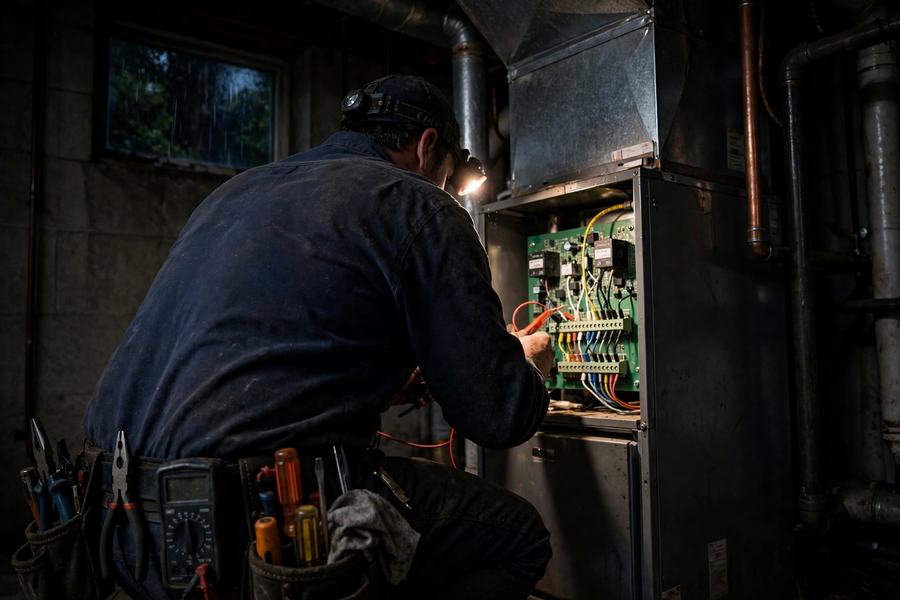
Signs you need emergency hvac service
- No heat with overnight lows in the teens or single digits
- No cooling during a heat wave with vulnerable people in the home
- Water pouring from an air handler or a condensate overflow
- A breaker that trips again every time the system starts
- Burning electrical smell at the unit or the vents
What the job involves
What affects the price
- Time of day and day of week; after hours rates are stated before dispatch, not discovered on the invoice
- Component failed and whether it is a stocked truck part
- System age, which decides whether an emergency repair is sound money or a bridge to replacement
- Weather severity, which sets the triage order across the whole call board
When it is an emergency
This page is the emergency, and its first rule is the exception: gas smell or a sounding carbon monoxide alarm is not an HVAC call, it is an evacuation and a utility or 911 call. Everything else on this page (no heat in deep cold, no cooling in dangerous heat, water pouring, breakers tripping) is a call now, and saying who is in the house helps the dispatcher order the board honestly.
PLACEHOLDEREmergency HVAC Service across the San Clemente area
Related services
AC Repair
AC diagnosis sorted by the freeway first: corrosion and age west of I-5, workload failures in Talega and the inland heat.
HVAC System Replacement
Replacement sized by a real load calculation to the marine layer or the inland heat, with salt protection priced for coastal condensers.
Heat Pump Repair & Installation
Heat pump service and dual fuel pairings for a climate they suit, winter defrost questions answered in the house's own numbers.
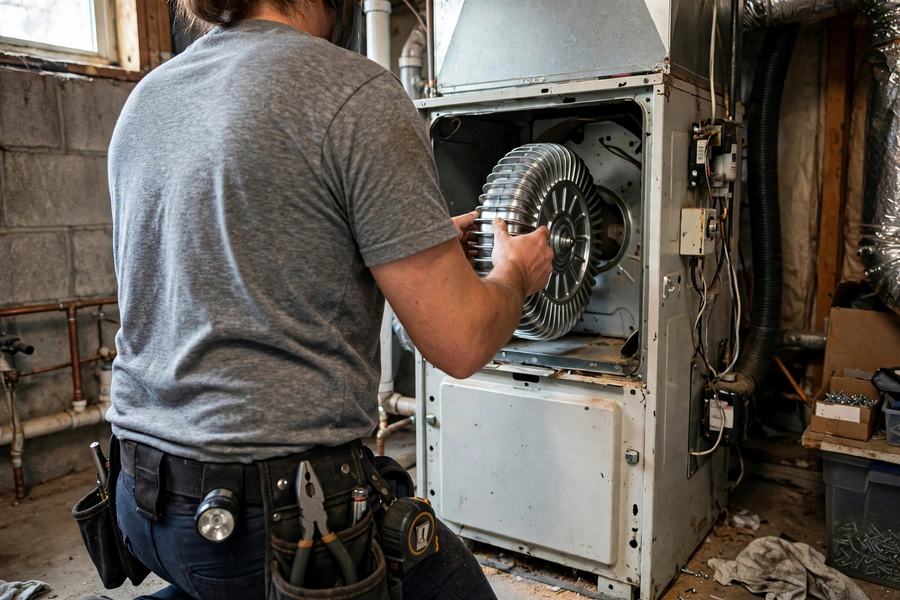
Furnace & Heating Repair
Mild climate furnace care for gas units that sit idle most of the year, igniters, sensors, and the exchanger conversation included.
Emergency HVAC Service questions, answered
When is emergency hvac service an emergency?
This page is the emergency, and its first rule is the exception: gas smell or a sounding carbon monoxide alarm is not an HVAC call, it is an evacuation and a utility or 911 call. Everything else on this page (no heat in deep cold, no cooling in dangerous heat, water pouring, breakers tripping) is a call now, and saying who is in the house helps the dispatcher order the board honestly.
What affects the price of emergency hvac service in San Clemente?
The main price factors for emergency hvac service are covered in the cost section above. The contractor confirms the exact price in a written estimate after seeing the job, and nothing is owed until you approve it. The call and the referral are free.
Repair or replace: my system is 15 years old. How do I decide?
Use the arithmetic the trade uses: multiply the repair quote by the system's age in years. Past roughly 5,000, replacement usually wins; well under, repair usually wins. A $400 repair on a 15 year old system (6,000) sits on the line; a $1,800 compressor on the same system (27,000) is well past it. Add the condition evidence: refrigerant type on older cooling systems, duct condition, and whether this is the first major repair or the third. Any company should show you both prices in writing; a replacement pitch without a repair price is a sales call, not a diagnosis.
How much does a new HVAC system cost in San Clemente?
Published national guides put full system replacement commonly between $5,000 and $12,500 or more installed, with size, efficiency tier, fuel type, and duct work deciding where a house lands. Single component repairs run $150 to $650 for most findings, and a diagnosis visit runs $75 to $200. The honest quote separates equipment, duct corrections, and electrical or venting changes into lines, because the duct line is where replacement quotes quietly differ by thousands between companies measuring the same house.
There is ice on my AC line and the coil looks frozen. What now?
Turn the cooling off and run the indoor fan. A frozen coil is a symptom, usually of low airflow (filter, blower, closed or blocked vents) or low refrigerant from a leak, and running the system frozen risks the compressor, the most expensive part in the system. Let it thaw fully (hours, not minutes) before a technician tests it, because readings on a frozen coil lie. Do not chip the ice. If it freezes again after a filter change, the cause is refrigerant side or blower side, and that is a diagnosis visit, not another thaw.
Request a callback
Prefer to talk later? Leave your details and an independent local pro will call you back. No charge to you, no obligation.
Cristianitos Heating and Air is a free referral service. Submitting this form connects you with independent local contractors who provide the work.